General Information on LiteCycle Electrical Enclosures
LiteCycle Enclosures · Products for Automation
Choose a LiteCycle enclosure faster. Protect the right connections.
Compare LiteCycle terminal enclosures, clear-cover terminal boxes, aluminum junction boxes, and push-button enclosures for industrial wiring and control applications.
Start with the job, then confirm terminal count, dimensions, cable entry, material, and environmental rating before ordering.
LiteCycle enclosures organize and protect wiring junctions, terminals, and operator controls.Choose by application
What does your installation need?
LiteCycle electrical enclosures organize and protect wiring junctions and operator controls. Terminal boxes simplify wire termination with integrated screw terminals, clear-cover models support visual inspection, aluminum boxes provide rugged protection, and push-button boxes provide dedicated locations for field controls.
Start with the enclosure type that matches the application, then confirm the terminal layout, environmental rating, entry method, dimensions, and product drawing.
FAST WIRING
ABS terminal enclosures
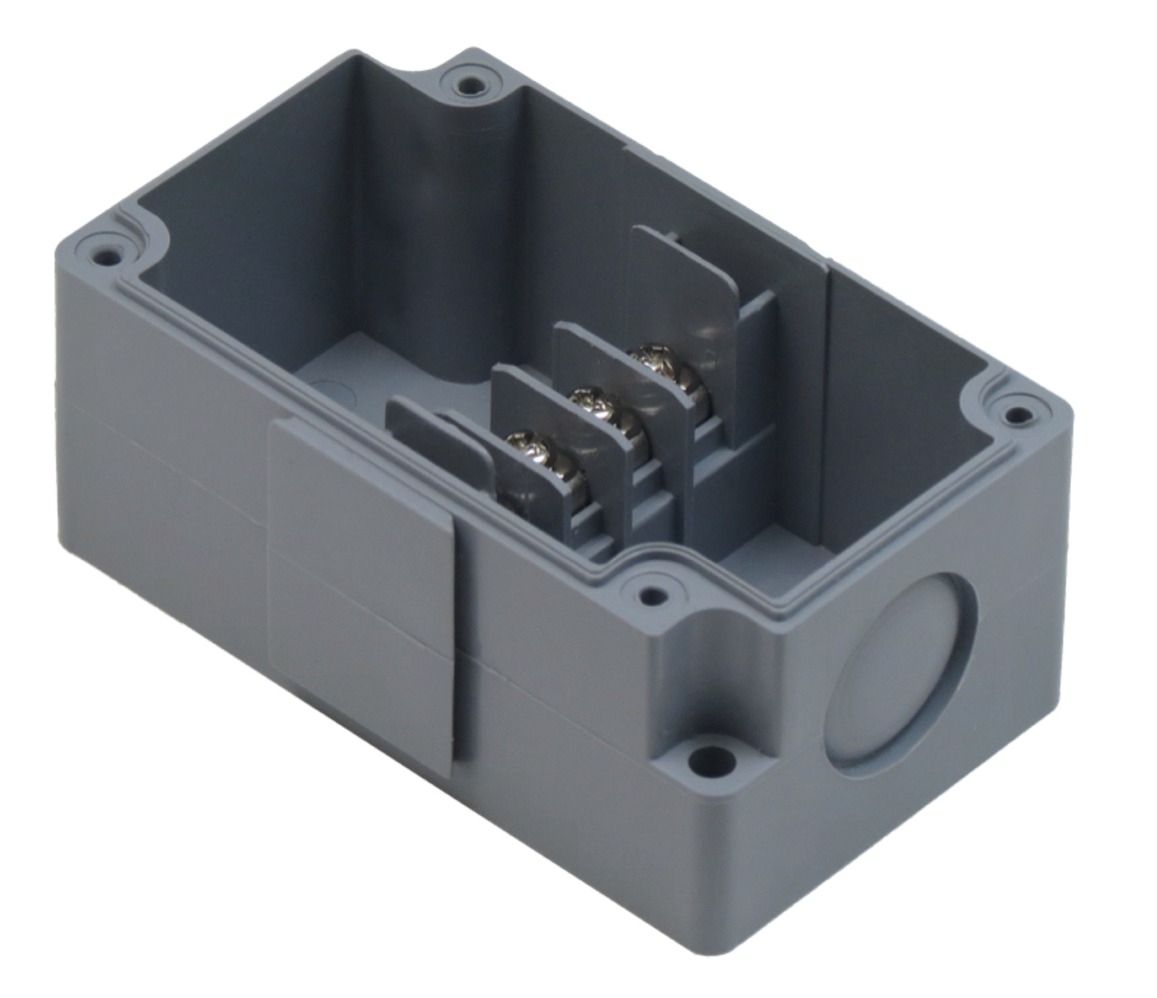
Use integrated terminal strips to join field wiring without separately sourcing a box and terminal block. Gray models fit machinery and control-system installations, while ivory models suit cleaner visual environments such as offices and medical-device support systems.
Primary use
Machine wiring, robotics, solar controls, and general automation.
Selection points
Terminal count, wire gauge, voltage/current rating, entry size, dimensions, and IP rating.
Before choosing: Confirm the terminal layout and molded cable-entry size against the installation drawing.
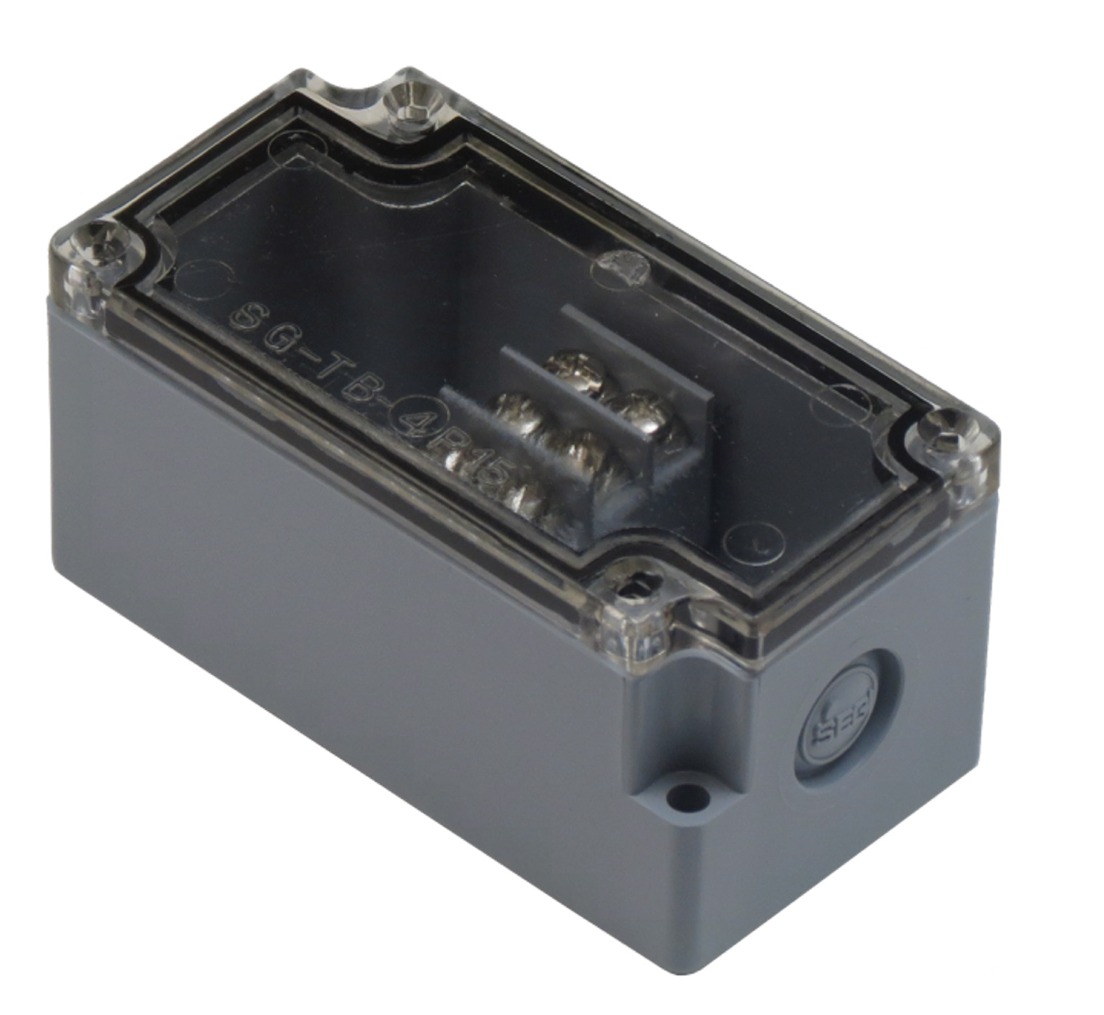
Use a clear cover when maintenance teams need to inspect terminal condition or conductor position without removing the enclosure cover. These models are useful on production equipment and plant systems that receive routine visual checks.
Example
SG-TB-4PT-GC has 4 positions, 8 terminals, a clear polycarbonate cover, and IP65 protection when installed with a matching cable gland.
Confirm
Required IP rating, cable entry, terminal count, and cover visibility requirements.
Best fit: Installations where visual inspection can reduce unnecessary enclosure opening.
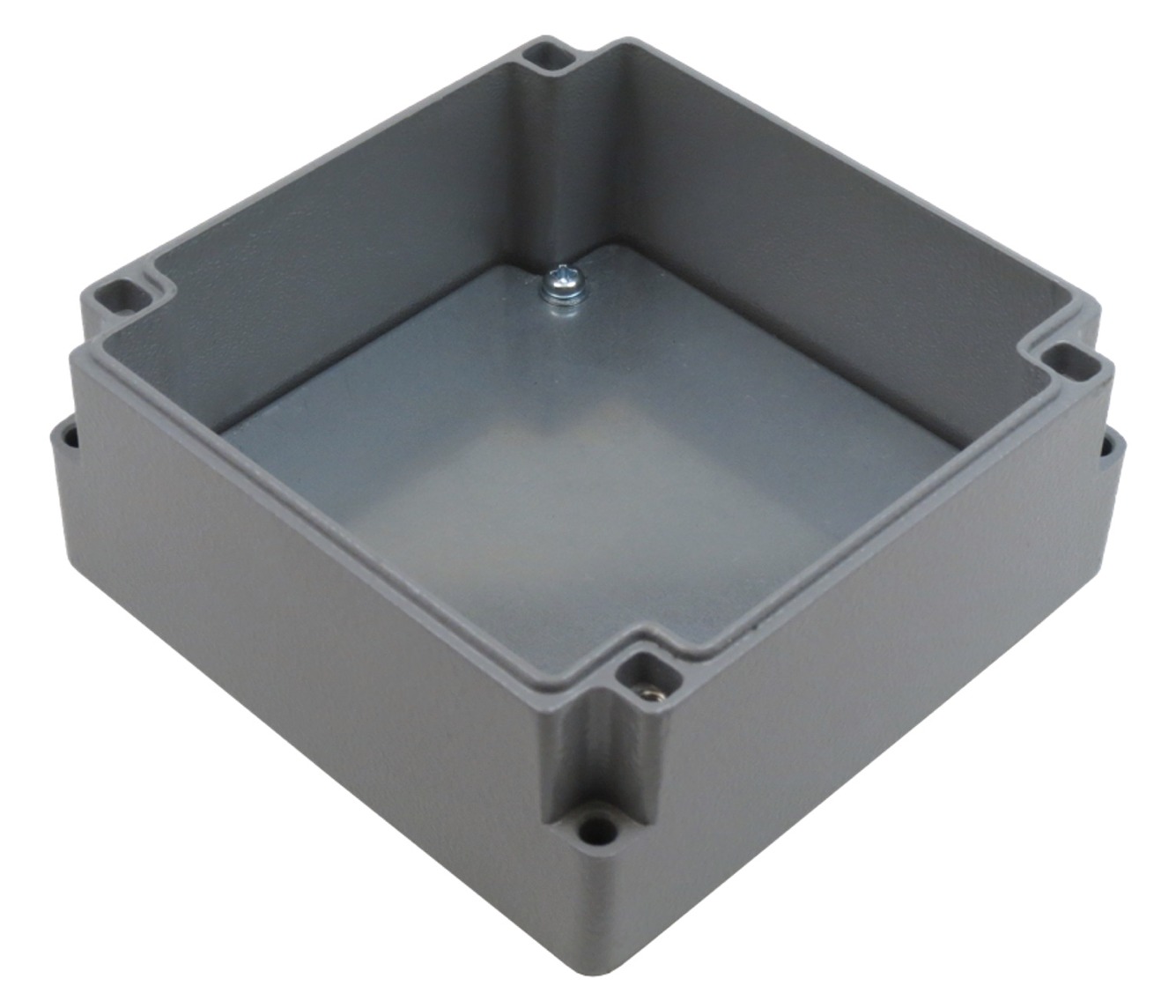
Choose cast aluminum for rigid mechanical protection, compact field junctions, and installations exposed to dust or temporary water immersion. Powder-coated surfaces add corrosion resistance.
Size range
Compact junction boxes begin near 61 × 71 × 48 mm, with larger versions reaching 160 × 260 × 90 mm.
Best fit
Welding, robotics, machinery, warehouses, pneumatics, electronics, and industrial utility systems.
Before choosing: Confirm usable internal space after fittings, glands, terminals, and other components are installed.
Mount emergency-stop switches, start/stop buttons, selector switches, or pilot lights in high-visibility PBT boxes. Red is used for emergency functions, while yellow improves visibility for cautionary or general field controls.
Control openings
22 mm, 25 mm, or 30 mm.
Configurations
1 through 4 positions with molded cable-entry knockouts.
Before choosing: Match the operator diameter first, then verify control depth, contact-block clearance, and cable-entry location.
A correct enclosure choice depends on the complete installation, not only the outside dimensions.
1. Define the contents
Count terminals and determine required service space.
2. Match the environment
Choose an IP rating and material for dust, water, impact, and corrosion exposure.
3. Cable entry & mounting
Verify molded knockouts, center marks, thread size, cable outside diameter, and gland rating.
4. Check access & visibility
Use a clear cover for visual inspection or a solid cover when visibility is unnecessary.
5. Confirm the drawing
Review internal dimensions, mounting points, approvals, and installed-component clearances before ordering.
Rating reminder: The enclosure rating can be reduced by unsealed holes, incorrectly sized cable glands, loose covers, or field modifications. Match every cable entry and accessory to the required installation rating.
Quick reference
LiteCycle enclosure selection tips
Gray ABSA practical choice for machine wiring, robotics, and control-system terminations.
Clear coversUse when routine visual inspection of terminals and conductor position is useful.
AluminumSelect rugged cast boxes where IP67 dust and temporary immersion protection is required.
Red / yellow control boxesUse red for emergency functions and yellow for cautionary or general field controls.
Common questions
LiteCycle enclosure FAQ
Click or tap to expand
What is the difference between a terminal enclosure and a junction box?
A terminal enclosure includes an integrated terminal strip for organized conductor connections. A junction box provides open interior space for custom splices, devices, mounting plates, or customer-selected terminals.
When should I choose a clear-cover enclosure?
Choose a clear cover when technicians need to inspect terminal condition or wiring status without opening the box. It is useful on production equipment and plant systems with scheduled visual checks.
Are LiteCycle aluminum junction boxes waterproof?
LiteCycle aluminum junction boxes listed as IP67 are dust-tight and designed to withstand temporary immersion under the test conditions for that rating. Correctly rated cable glands and properly sealed field entries are required to maintain protection.
How do I size a LiteCycle push-button enclosure?
Match the number of control positions and the operator mounting diameter first. LiteCycle options include 22 mm, 25 mm, and 30 mm openings in 1-position through 4-position configurations. Then confirm control depth, contact-block clearance, and cable-entry location.
Next step
Ready to select a LiteCycle enclosure?
Compare the product drawing against your terminal count, cable entries, mounting space, and environmental rating before placing the order.